
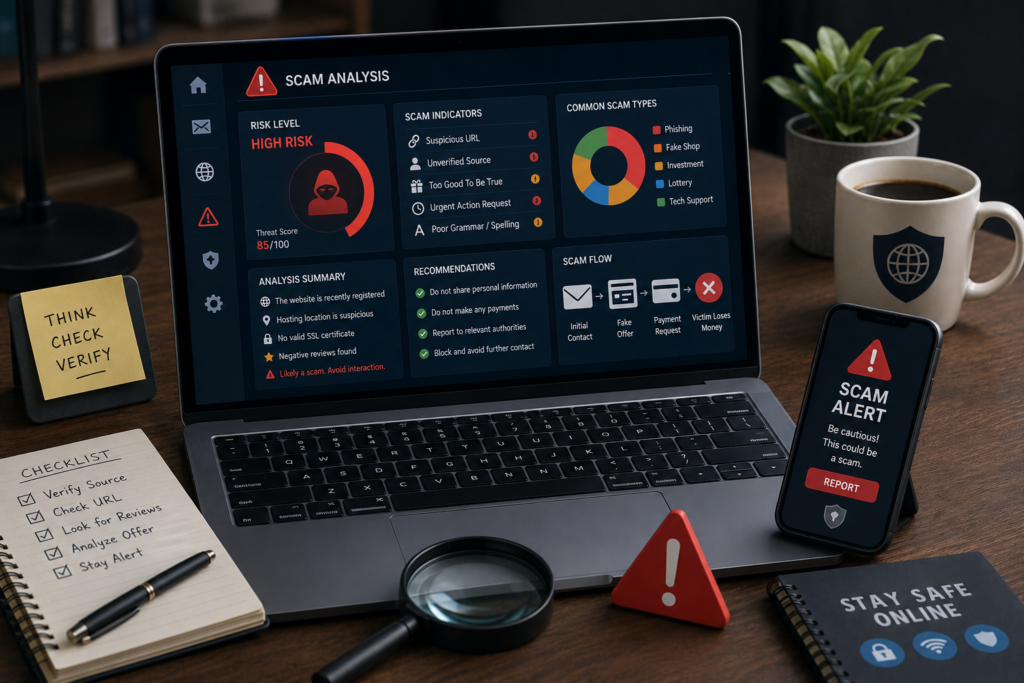
Online Scam Analysis
Online scam analysis is the process of investigating suspicious digital interactions, scam-related activities, deceptive online behavior, phishing attempts, impersonation incidents, and cyber-enabled fraud activities.
Understanding Suspicious Online Activities & Digital Scam Patterns
Online scams are evolving rapidly and becoming more sophisticated, targeted, and difficult to identify. Cybercriminals use phishing attacks, fake websites, impersonation tactics, fraudulent communications, social engineering methods, and manipulated digital interactions to deceive victims and gain unauthorized access to information, accounts, or financial assets.
Many victims are left confused after incidents occur, often unsure about how the scam operated, what information may have been exposed, and how future risks can be reduced.
At Vyrosec, our Online Scam Analysis services focus on helping individuals and organizations analyze suspicious online activities, understand scam-related behavior, review available digital evidence, and improve cybersecurity awareness after cyber fraud incidents occur.
Our approach combines investigation-focused analysis, structured evidence review, and practical cybersecurity awareness to help victims better understand online scam risks and improve long-term digital safety practices.
Our Online Scam Analysis Services
Investigation-focused cybersecurity services designed to help individuals and organizations analyze suspicious online activities, deceptive communications, phishing incidents, and digital scam-related behavior.
Phishing Scam Analysis
Review of phishing emails, fake login pages, suspicious links, impersonation attempts, and deceptive communications designed to steal sensitive information.
Fake Website Investigation
Analysis of suspicious websites, cloned login portals, fake service pages, fraudulent platforms, and deceptive online interfaces connected to scam activities.
Social Engineering Scam Review
Investigation support for manipulation tactics, fake support communications, impersonation methods, psychological scam techniques, and deceptive online interactions.
Fraud Communication Analysis
Review of suspicious emails, messages, chats, social media communications, promotional scams, and online fraud-related interactions.
Digital Evidence Review
Analysis of screenshots, links, account alerts, suspicious files, metadata, chat records, and other available digital evidence related to scam incidents.
Scam Awareness Guidance
Practical cybersecurity recommendations focused on improving scam awareness, safe digital behavior, account protection practices, and long-term cybersecurity understanding.